
Week 12: Fake job offers on websites posing as Swiss companies
Fraudulent job offers come in many different forms and levels of sophistication. A few years ago, scammers mainly targeted people looking for work in the hospitality sector. In these cases, applicants were asked to pay fictitious health insurance contributions upfront. This was followed by job offers involving fake platforms, where people were asked to complete tasks for a fee – but ended up paying more than they earned. In the latest version, scammers no longer just invent Swiss companies. They also copy real ones. In these cases, the job advertisements are even placed in newspapers.

People who are looking for work – especially those who are currently unemployed – often do everything they can to secure a job. Scammers exploit this by making false promises and deliberately taking advantage of their trust.
The original version
Early versions of fake job offers mainly targeted positions in the hotel sector. Applicants who showed interest were asked to make an upfront payment of between EUR 300 and 1,000, for example for a supposed work permit in Switzerland or for arranging health and accident insurance. These offers were mainly posted on Italian job platforms and, more recently, on Greek ones.
The extended version
In this version, the work involves tasks such as writing reviews, purchasing products, recommending fashion items or testing apps. After being recruited, the unsuspecting victims are directed to a platform supposedly operated by the company, where 'salary payments' and 'bonuses' are said to be managed. In reality, however, any earnings are only credited within the platform itself. The number of available tasks quickly drops to zero. To keep working and avoid waiting for new tasks, users are encouraged to pay a fee to generate additional ones. The rude awakening comes when they try to withdraw their earnings. The platform operators repeatedly demand further payments, claiming these are required to release the funds – until the victims realise they have been scammed.
Online job offers in the name of real Swiss companies
Recently, scammers have begun using the names of companies that are registered in the commercial register but do not have their own website. They then create a fake website for these companies in order to deceive potential victims. The NCSC has already observed this approach in other types of scams. One sign of such websites is that the domain was only registered a few days earlier. Companies in the logistics sector are particularly affected. The roles advertised are usually flexible jobs that can be done from home. The scammers operate across language regions, meaning all parts of Switzerland are affected. For example, a supposed company in Ticino has also been reported.
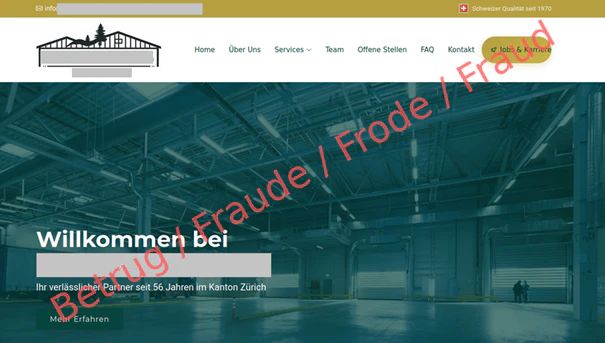
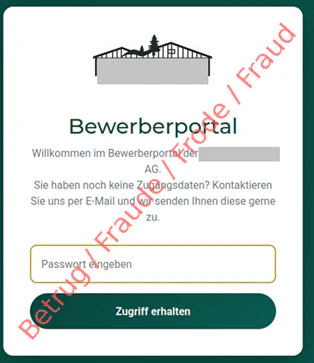
A notable feature of the site is the "jobs and careers" section, which is placed prominently and immediately catches the eye. Clicking on it leads to a password-protected page with further details about the job offer. The password was provided at the start of the application process. This is intended to restrict access so that not just anyone – especially security authorities – can view the page.
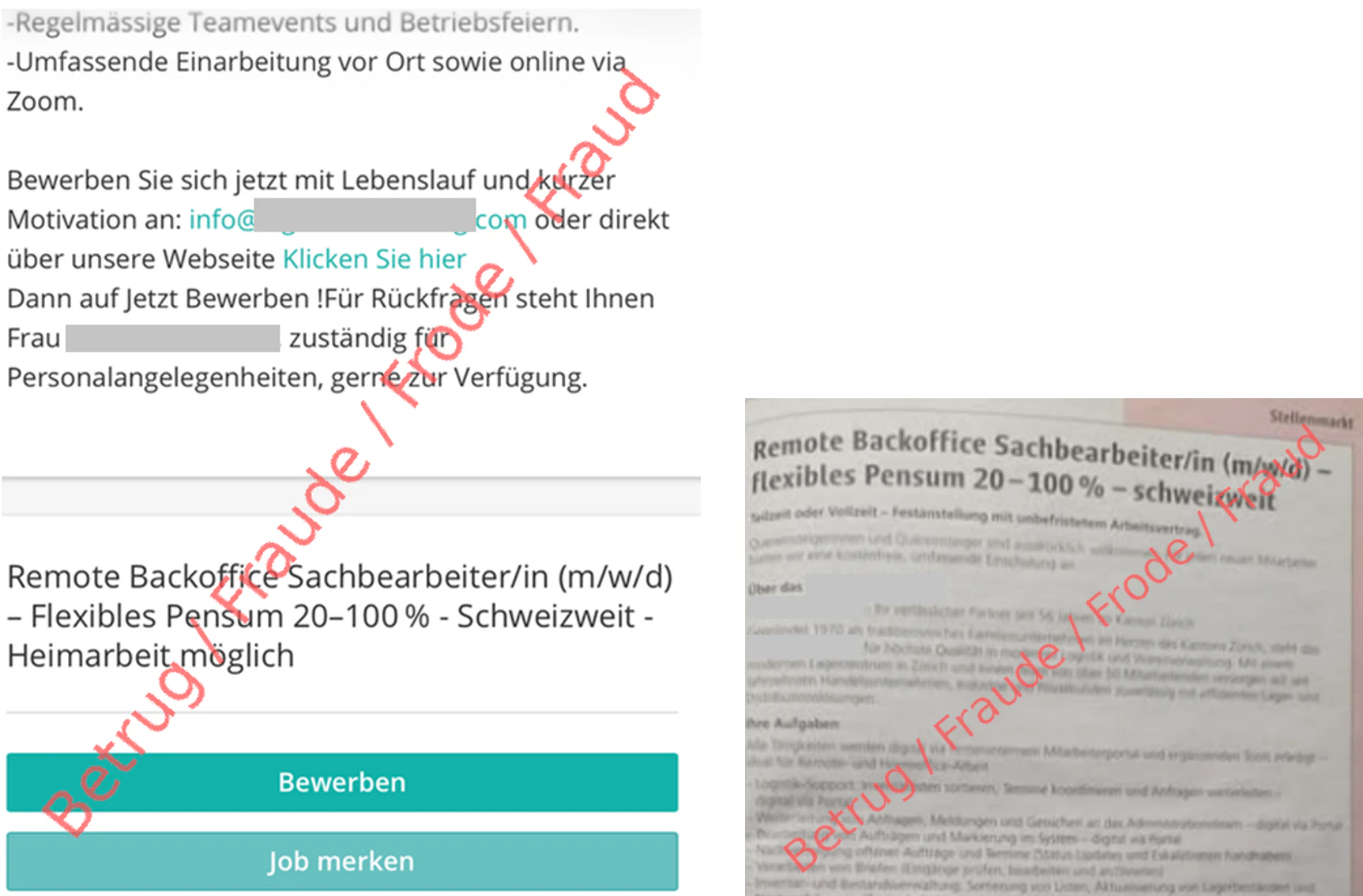
The fake job offers are advertised on legitimate job platforms. The NCSC is even aware of cases where fraudulent job advertisements have appeared in printed newspapers – something not previously observed.
If someone responds, they are asked to install the messaging service Element. During the application process, they are asked to upload their CV, employment references, and diplomas.
The ultimate aim of this scam is not yet fully clear. In one case, the victim was asked to purchase Cryptonow vouchers worth up to CHF 2,500, with a refund promised later in the process. Meanwhile, the scammers gain access to extensive personal data that can be used for further scams.
Recommendations
- Ignore such messages.
- Do not respond to job offers that require advance payment.
- If you have already made contact, break it off immediately. Do not reply to any further messages from the scammers.
- Be cautious of any payments you are asked to make while carrying out the job.
- If you have suffered a financial loss, we recommend that you report it to the police. You can find your nearest police station on the Suisse ePolice website (available in German, French and Italian).
- If a job offer sounds too good to be true, it probably is, especially if it involves simple tasks for unusually high pay.
Current statistics
Last week's reports by category: