
Week 20: When the hype becomes a trap – Ticket scams around the World Cup and other major events
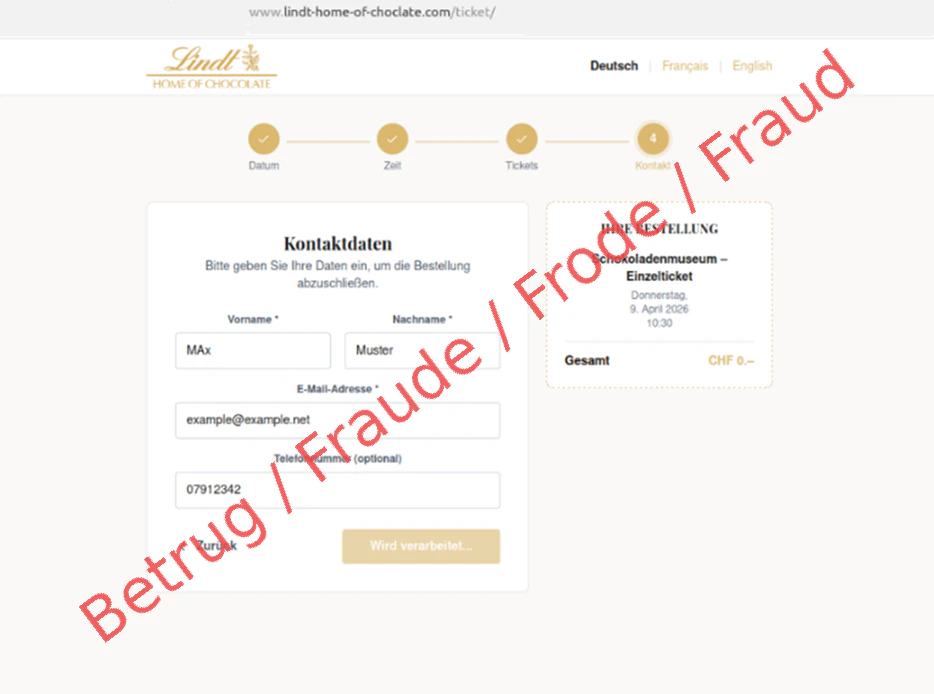
The Ice Hockey World Championship has just begun, and the FIFA World Cup is already on the horizon. But fans are not the only ones looking forward to major events like these – scammers also see them as an opportunity to deceive supporters and make money. Last week, the NCSC received several reports of websites linked to the FIFA World Cup that copied official ticket outlets. But criminals also exploit opportunities outside major events to deceive people looking for tickets.

Cybercriminals often exploit major events to deceive people and get money out of them. For example, they create fake websites selling tickets or fan merchandise. The offers are often hard to resist because the prices seem so temptingly low. In other cases, tickets are offered for events that are sold out or where only very limited numbers are still available on the regular market. Expecting a quick delivery, people pay the asking price. But they are soon disappointed: the tickets they ordered never arrive or turn out to be invalid.
Last week, the NCSC received several reports of websites linked to the upcoming 2026 FIFA World Cup.
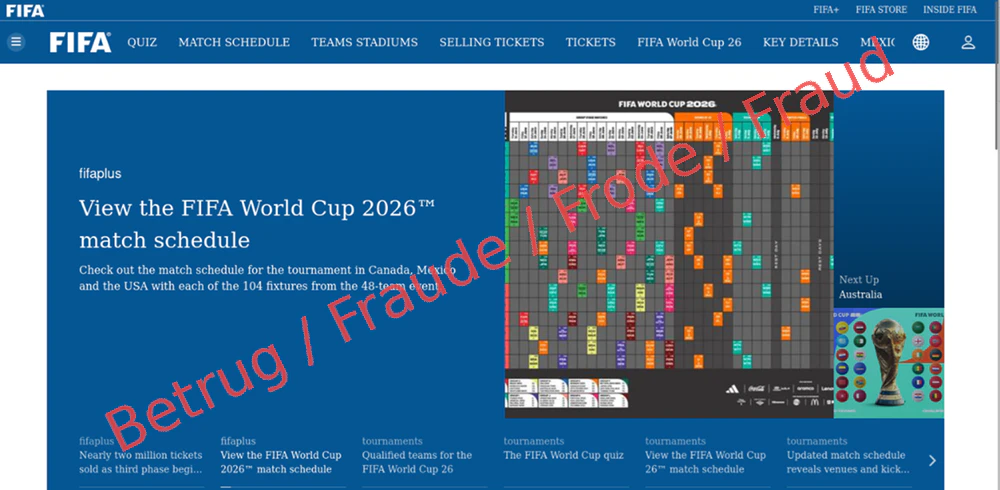
Fake discounts with a countdown: Scammers imitating Zoo Zurich
Fake ticket websites are not limited to events and tourist attractions. One example that is repeatedly reported to the NCSC involves fake Zoo Zurich websites. What makes these scams especially insidious is that they deliberately put buyers under pressure to make a decision. The page advertises what looks like a generous 40% discount, but only for people who buy within the next few minutes. To increase this time pressure, a clock is displayed and counts down relentlessly. People are constantly reminded of how little time they supposedly have left to benefit from the discount. The aim is to create the impression of a one-off opportunity and deliberately trigger FOMO – the fear of missing out. Incidentally, once the time runs out, the timer does not stay at zero. Instead, it resets to 15 minutes and starts counting down again. Anyone who tries to buy the tickets is asked to enter their credit card details on the fake site, falling straight into the phishing trap.
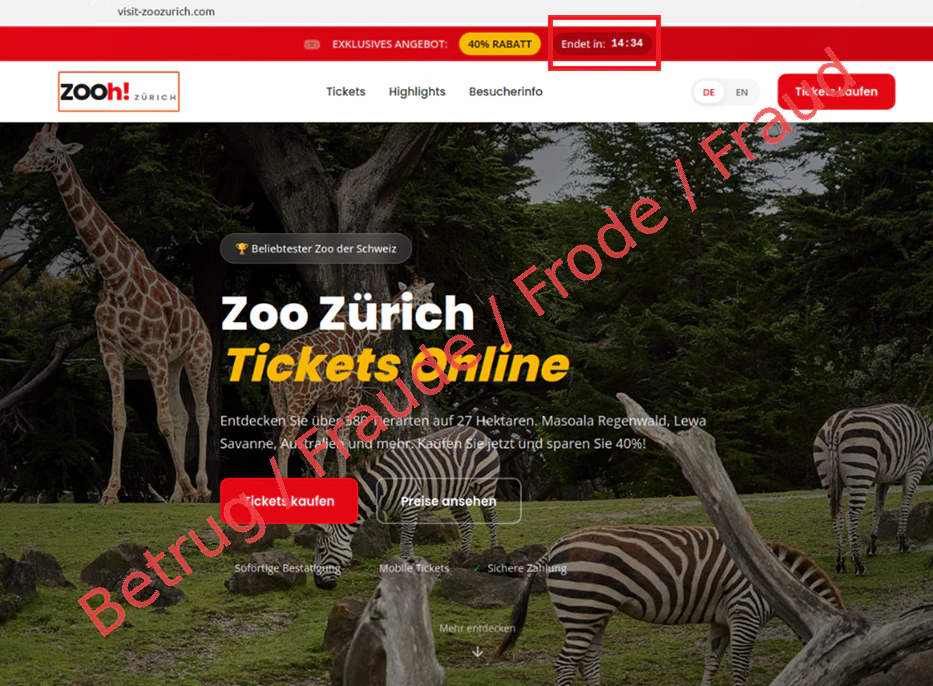
Sweet temptation, bitter trap: Fake tickets for the Lindt museum
Chocolate lovers are also being targeted by ticket scammers. In one recent case, scammers copied the website of the Lindt chocolate museum. The NCSC has already received two reports of this kind of fraudulent website. What makes these cases unusual is that the scammers are deliberately taking advantage of people's typos. In one case, the domain name misspelled "chocolate" as "chochlate", omitting the "e". In another case, an "s" had been added to "chocolate". The scammers are banking on people mistyping the address and unwittingly ending up on a fake site that looks deceptively real. Here too, anyone trying to order tickets was asked to enter their credit card details. To make the deception even more convincing, after the purchase, victims were redirected to a separate page belonging to a payment service provider, just as they would be in a legitimate online shop.
Ticket scams via dating apps
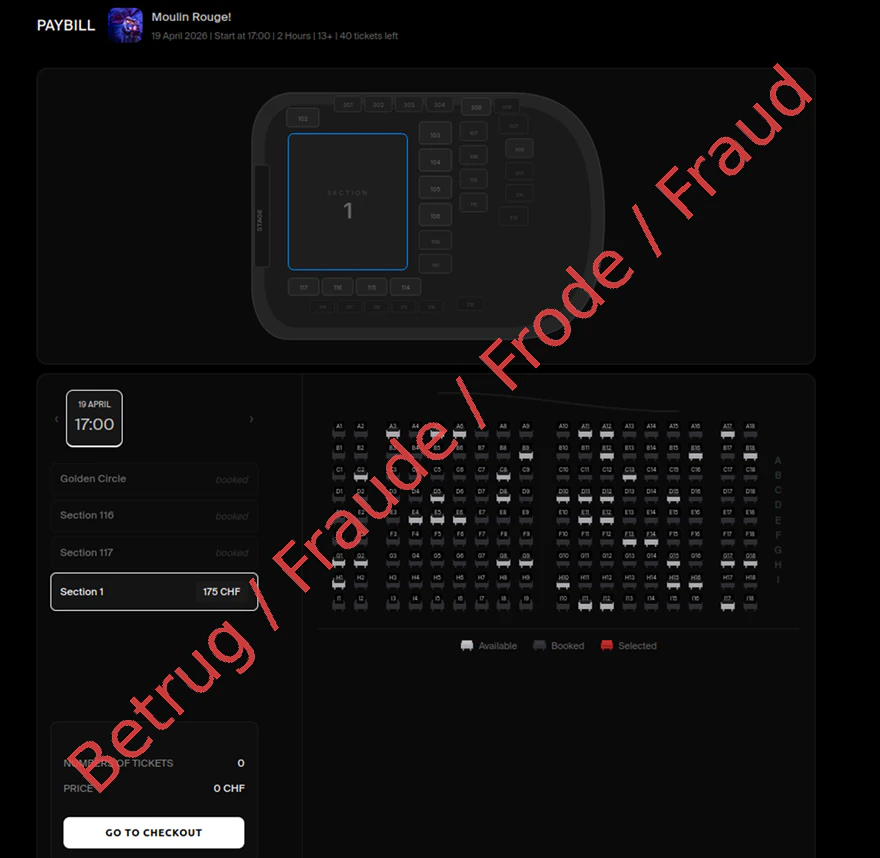
The NCSC regularly receives reports of websites offering fake tickets that are linked to romance scams. In these cases, scammers use dating apps to find potential victims. They pose as friendly, good-looking people and quickly build an emotional connection. After a short time, they suggest meeting at a concert or theatre performance and send a link to what appears to be a legitimate ticket website for concerts or theatre events in Switzerland. At first glance, the website linked in the message looks legitimate and professionally made. But if you check the theatre or concert venue's official website, you will quickly see that the performance listed is not actually on the programme. Here too, victims are tricked into entering their credit card details.
Recommendations
- Only purchase tickets through official or trusted channels. Wherever possible, use ticket outlets approved by the event organiser, such as official websites, recognised points of sale, or official resale platforms. Avoid grey-market platforms.
- Be wary of offers that seem too good to be true or that create a sense of urgency. Be suspicious if someone is offering last-minute tickets for a sold-out event at face value or a very low price, or if a seller or buyer pressures you to complete the transaction immediately. If you suspect a scam, break off contact immediately.
- Report attempted scams. Notify the operators of the website or app where the contact took place if you spot a suspicious listing or have fallen victim to a scam, such as the classifieds website or Facebook group.
Current statistics
Last week's reports by category: