Hot topics 2025

30 December 2025

Week 52: More focused, more intricate, more sophisticated – almost 65,000 reports submitted to the NCSC in 2025

30.12.2025 - In its final weekly review of the year, the NCSC typically reflects on the reports it has received over the past twelve months. This year, the NCSC received almost 65,000 reports of cyberincidents, which represents a significantly smaller increase than in previous years. Although reports concerning 'calls supposedly from the police' still dominated in 2025, more reports in this category were recorded in the first half of the year than in the second. This decline was offset by a substantial rise in the number of reports concerning 'online investment fraud'. Despite only a moderate increase in reporting volume, scams have become much more sophisticated.

23 December 2025

Week 51: Alleged Christmas miracle – When fraudsters recover your lost funds

23.12.2025 - Christmas is considered a time of hope and reflection, and this is precisely what fraudsters who pose as alleged helpers are counting on. They tell victims who have lost money through online investment fraud, for example, the good news that these lost funds have 'reappeared'. But the miracle never happens. Instead of a refund, victims are presented with bills, and are pressured to pay various 'service fees' until it becomes clear that the promised refund will never materialise. This is how the promised Christmas miracle turns out to be fraud.

16 December 2025

Week 50: Callback with financial consequences

16.12.2025 - Last week, the National Cyber Security Centre (NCSC) received an increasing number of reports about a scam that has been observed for some time. In this case, the victim is not pressured to click on a link, as is usually the case. Instead, under the pretext of an alleged suspicious transaction, they are asked to call back a telephone number. However, anyone who dials the number will not be connected to customer service, but directly to the fraudsters' call centre.

12 December 2025

Report on the influence of artificial intelligence in cybersecurity

12.12.2025 - The Federal Council has examined how artificial intelligence (AI) is influencing cybersecurity and whether the National Cyberstrategy (NCS) can keep pace with rapid developments in AI. In a report on the opportunities and risks of AI systems in cybersecurity, commissioned in response to postulate 23.3861 from Gerhard Andrey and approved on 12 December, the Federal Council concludes that while AI acts as a catalyst for existing trends in cybersecurity, it does not change the fundamentals. AI projects will now be identified more clearly in the NCS to ensure transparency and allow for more focused control.

9 December 2025

Week 49: The hidden risks of enticing employment opportunities - How job seekers fall into the malware trap

09.12.2025 - Cybercriminals leverage how application processes work to build trust and manipulate job seekers. Enticing employment opportunities on fake profiles seem attractive and authentic, lowering candidates' level of vigilance. The hope of a successful job offer can lead to job seekers acting rashly, which scammers exploit to their own advantage.

2 December 2025

Week 48: Phishing impersonating SERAFE under the pretext of "residence verification"

02.12.2025 - A current phishing campaign is misusing the name "SERAFE". Under the pretext of needing to "verify your current living situation", scammers are attempting to steal large amounts of personal information. In addition to data such as name, email address, date of birth and telephone number, scammers are also asking for AHV numbers, the date of any change of address and, ultimately, credit card details. This week's review explains why this specific combination of data is particularly useful to scammers and how you can protect yourself against them.

1 December 2025

NCSC Director Florian Schütz visits Japan for high-level cybersecurity talks

01.12.2025 - Florian Schütz, director of the National Cyber Security Centre (NCSC), is travelling to Japan to strengthen international cooperation in the field of cybersecurity. The trip underscores the strategic importance of bilateral and multilateral cooperation in the face of increasing geopolitical tensions and hybrid threats.

25 November 2025

Week 47: Black Friday and Cyber Monday are just around the corner

25.11.2025 - As the days get shorter and temperatures drop, discounts are heating up. With Black Friday and Cyber Monday fast approaching, online retailers are preparing for the busiest time of the year. Consumers are looking for the best deals. And, unfortunately, scammers are busy too – and they're ready to profit from the rush.

24 November 2025

CSRM – A new method for strengthening cybersecurity and resilience

24.11.2025 - The National Cyber Security Centre (NCSC) has developed a Cybersecurity and Resilience Method (CSRM) to help organisations take a more structured approach to these topics and strengthen their overall security. To improve the method's effectiveness and practicality, the NCSC is collaborating closely with selected partners and interested stakeholders. Organisations and companies are invited to participate in the ongoing consultation, which runs until the end of January, and share their feedback.

19 November 2025

Federal Council to take action against scam websites

19.11.2025 - Digital crime in Switzerland has more than doubled in recent years. In response to Postulate 22.3457, which was submitted by National Council member Stefan Müller-Altermatt, the Federal Council examined the coordination between the relevant authorities, the police and the domain registry operators with regard to tackling scam websites. This assessment was carried out as part of a report on deactivating scam websites and coordinating the national response to online scams. Approved by the Federal Council at its 19 November meeting, the report concludes that, although the existing legal instruments are fundamentally effective, they must be applied more consistently.

18 November 2025

Almost five-fold increase in reports of online investment ad scams

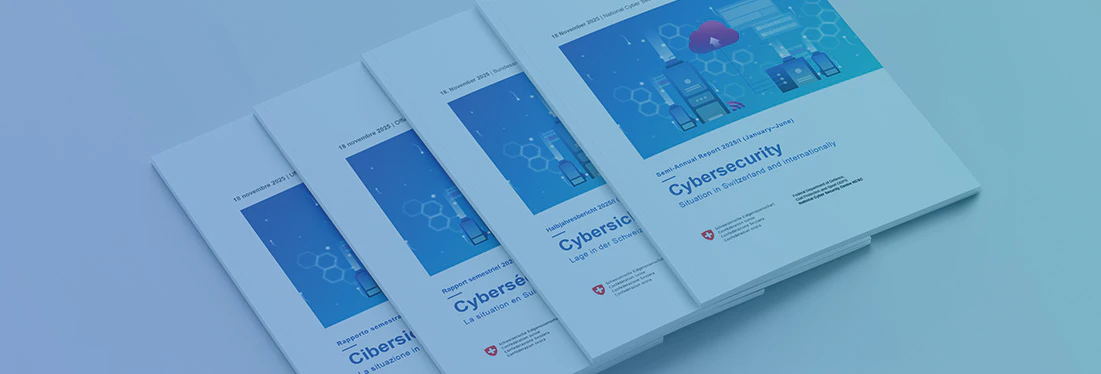
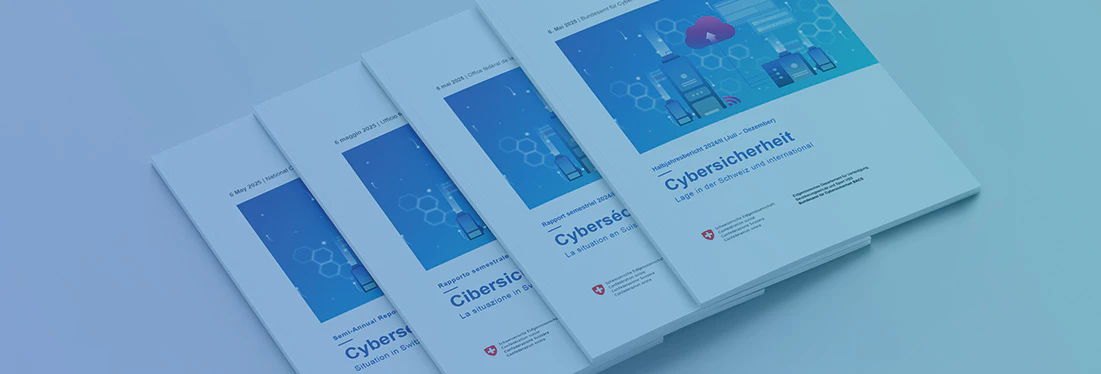
18.11.2025 - The latest semi-annual report from the NCSC shows that the centre continued to receive large numbers of reports in the first six months of 2025. The number of reports concerning fraud – over half of the total – also remains high. There has been a marked increase in reports of online investment advertising scams. Cybercriminals often misuse celebrities as decoys to gain the trust of potential victims. The semi-annual report also focuses on various targeted phishing campaigns aimed at bank customers, the ongoing ransomware threat and hacktivism at major events such as the WEF and the Eurovision Song Contest.

17 November 2025

Week 46: How scammers exploit the "Swissness factor"

18.11.2025 - There have been an increasing number of reports in recent weeks of scam websites claiming to belong to real Swiss companies. The affected companies often do not have their own website but are listed in the ZEFIX commercial register. Companies with a web presence can also be targeted. Scammers deliberately exploit the "Swissness factor" to create a sense of trust, as Swiss companies are generally considered reliable and trustworthy. Scammers exploit this perception to manipulate their victims.

13 November 2025

Cyberthreat alerts now also on Alertswiss

13.11.2025 - Alertswiss will now also provide warnings to the public and businesses about serious cyberthreats. The NCSC and the Federal Office for Civil Protection (FOCP) have stepped up their collaboration. Cyberalerts are now integrated into both the Alertswiss app and website. This provides an additional channel through which to inform and warn the public as quickly as possible in the event of large-scale or unprecedented cyberattacks, and to provide practical guidance.

11 November 2025

Week 45: Phishing targeting cryptocurrency investors

11.11.2025 - Fewer and fewer people are falling for mass phishing attempts, so scammers are constantly refining their tactics. Instead of sending out large numbers of identical emails, they now focus on current social and economic issues and adapt their scams accordingly. Their messages are more targeted and sophisticated, designed to appear credible to the specific people they want to reach.

10 November 2025

Staying safe through a crisis: Emergency planning is the key to cyber resilience

10.11.2025 - Cyberattacks that paralyse public services or result in the disclosure of sensitive data can undermine the public's trust in government institutions. To help communes and organisations in Switzerland strengthen their cyber resilience, the NCSC has launched a project together with its partner network. As part of this project, the NCSC has developed an emergency planning model, a set of practical tools, and an educational video, all of which are available on its website. The NCSC is also offering Brown Bag Lunches to show communes and organisations how best to prepare for cyberincidents.

4 November 2025

Week 44: Lost iPhone – the phishing trap that follows

04.11.2025 - The NCSC has received reports of cases where iPhone owners have received a text message claiming that their lost or stolen device has been found abroad, months after it went missing. While such messages offer the hope of getting your phone back, they are in fact a targeted attempt to steal your Apple ID credentials. This week's review examines how these scams work in more detail.

31 October 2025

Cyber Security Month: Tips for senior citizens

31.10.2025 - The internet is very useful, whether for banking transactions, shopping or keeping in touch with family and friends, but it does expose you to certain dangers. One of the biggest is ‘phishing’. Fraudsters try to persuade you to reveal personal data like passwords or account information using fake emails, text messages or messages. Older people are a particular target for these scams. In order to raise awareness among all users in a playful way, BACS has developed a word search puzzle on the topic of phishing.

30 October 2025

Digital Switzerland Advisory Board: Cybersecurity in Switzerland today

30.10.2025 - At the Digital Switzerland Advisory Board meeting on 30 October the focus was on information security and cybersecurity. Under the chairmanship of Federal Councillor Martin Pfister and with the participation of Federal Chancellor Viktor Rossi, representatives from the cantons, business, academia and civil society met to exchange views on the current state of national cybersecurity measures. The discussions centred on information security and cybersecurity in the context of the National Cyberstrategy, and highlighted specific areas for action and examples of what works in practice.

28 October 2025

Week 43: How did scammers get my data? - A behind-the-scenes look at data misuse

28.10.2025 - The NCSC regularly receives questions from concerned members of the public such as: "How do the scammers know my name, my bank, or even my address?" It's a fair question. Fraudulent calls and emails often seem convincing precisely because they contain personal details we assume are private. The answer is complex and demonstrates just how methodical modern cybercriminals have become.

27 October 2025

Concept for coordinated cyberincident response

27.10.2025 - Due to the close interconnection of digital systems, cyberincidents can have an immediate impact on many different organisations. Successfully managing these incidents requires a coordinated approach involving all affected stakeholders, including those from the business and economic community, the cantons, and the federal government. The National Cyber Security Centre (NCSC) has developed a plan for coordinated cyberincident response, setting out how the federal government organises itself to ensure effective, coordinated management of incidents.

21 October 2025

Week 42: TWINT scammers count on sleepy victims

21.10.2025 - The NCSC regularly receives reports of phishing emails targeting TWINT users. These scams aim to steal credit card details or take over TWINT accounts – and not all of them rely on phishing websites. One recent case, which looked harmless at first but turned out to be carefully planned, involved a personal message and an early-morning money request designed to catch people off guard.

20 October 2025

Cyber Security Month: Tips for young people

20.10.2025 - Many young people spend a large part of their free time online. Whether chatting, on social media or gaming, the online world offers endless distractions. Since a large part of social life takes place on the internet and a lot of personal data is disclosed, the risk of being manipulated also increases. One of the biggest dangers is phishing.

17 October 2025

NCSC Director Florian Schütz visiting WEF Annual Meeting on Cybersecurity and Singapore International Cyberweek

17.10.2025 - Florian Schütz, Director of the National Cyber Security Centre (NCSC), is representing Switzerland at two major international cybersecurity forums this month, one in Dubai and one in Singapore. By contributing to discussions on global cyber resilience, artificial intelligence and international cooperation, he is advocating for a secure and resilient digital future, and reinforcing Switzerland's role as an active partner in global cyberpolicy.

16 October 2025

Cybercrime: The AKIRA group steps up its activities

16.10.2025 - In recent months, the hacker group AKIRA has stepped up its activities in Switzerland. Around two hundred companies have been victims of ransomware attacks, with damages currently amounting to several millions of Swiss francs, and to several hundreds of millions of dollars worldwide. Since April 2024, the Office of the Attorney General of Switzerland (OAG) has been conducting criminal proceedings. The investigation is being coordinated by the Federal Office of Police (fedpol), in close cooperation with the National Cyber Security Centre (NCSC) and the authorities in several other countries that are affected. The Swiss authorities stress the importance of contacting them before taking any action and of the need to file a criminal complaint.

14 October 2025

Week 41: Double deception – Scammers targeting scammers

14.10.2025 - Scam attempts come in many forms and are a regular topic in the NCSC's weekly reviews. In this case, however, it is not necessarily law-abiding citizens who are being duped. The focus is instead on people who don't always play by the rules themselves.

13 October 2025

Pilot project for testing security vulnerabilities in open source software

13.10.2025 - The National Cyber Security Centre (NCSC) and the National Test Institute for Cybersecurity (NTC) have conducted a pilot project to test two open source software solutions TYPO3 and QGIS for security vulnerabilities. Vulnerabilities were found in both products, which have since been fixed by the developer community. The pilot project has shown that targeted testing can strengthen the security of open source software (OSS) and increase Switzerland's cyber resilience. The NCSC is currently examining how security testing of OSS can be established on a permanent and structured basis in the future.

7 October 2025

Week 40: Classifieds phishing – shifting from links to malware

07.10.2025 - Exercise caution when selling things online. A well-known scam involving classified ad platforms has taken a dangerous turn: in addition to using phishing websites to harvest credit card details, criminals are now trying to trick victims into installing malware. Info stealer malware captures not just individual login credentials, but all passwords, financial details, and personal data stored on the computer. This week's review examines this new tactic and explains how you can protect yourself.

2 October 2025

Cyber Security Month: Tips for working people

02.10.2025 - Personal traces remain visible online for longer than intended. A thoughtless post, an open social media profile or an unsecured online account – all of these can have long-term consequences. Campaign ambassador Ivano Somaini will give an online lunchtime talk hosted by the NCSC on how to protect yourself and prevent personal data from falling into the wrong hands. Register today, places are limited.

30 September 2025

Week 39: One phishing attempt follows another

30.09.2025 - Last week the NCSC received an uptick in reports of phishing attempts that combine phishing with bogus support calls. The aim is to apply pressure and single out particularly susceptible targets.

29 September 2025

Six-month reporting obligation for cyberattacks on critical infrastructures

29.09.2025 - Since 1 April 2025, there has been a legal obligation in Switzerland to report cyberattacks on critical infrastructure. The National Cyber Security Centre (NCSC) regards the results after the first six months as positive. So far, a total of 164 reports have been received from critical infrastructures. From 1 October 2025, the planned sanctions for failing to report attacks will come into force.

25 September 2025

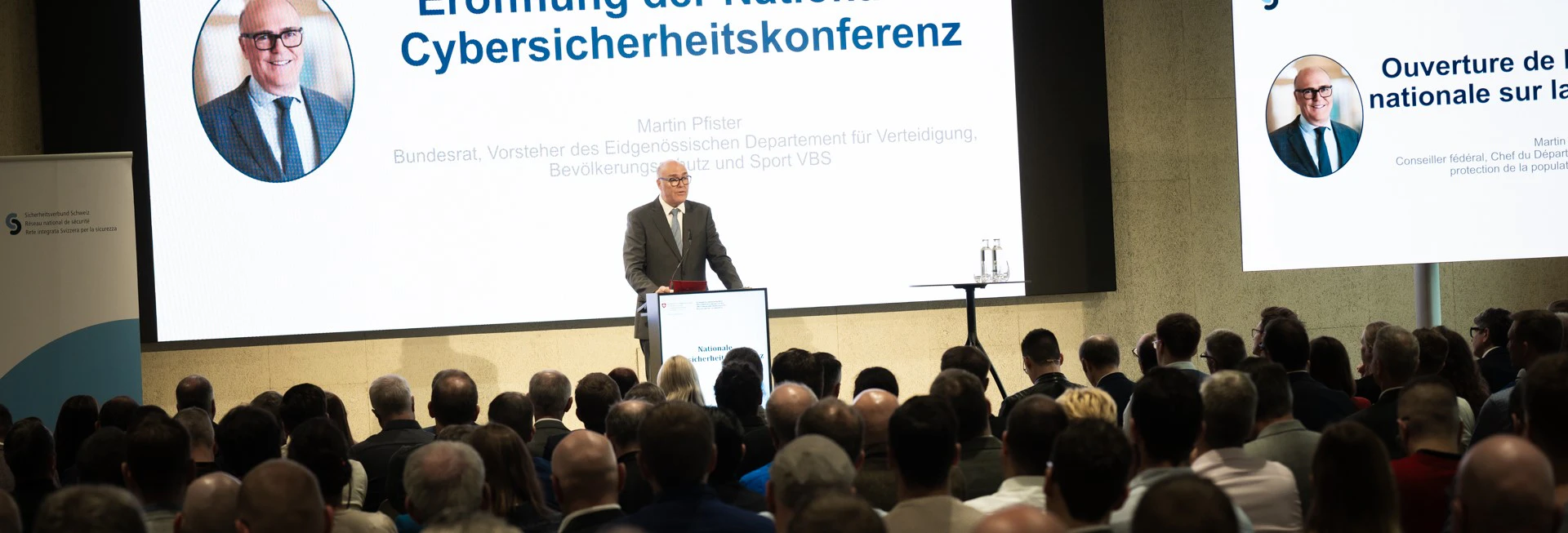
2025 National Cybersecurity Conference: “Cyber resilience: Regulation or personal responsibility?”

25.09.2025 - Current debate in the field of cybersecurity focuses on the optimal interplay between state regulation and individual responsibility. The theme of the National Cybersecurity Conference held today in Bern was “Cyber resilience: Regulation or personal responsibility?” Around 250 representatives from the fields of politics, public administration, business and academia discussed the key challenges in ensuring digital security in Switzerland. Federal Councillor Martin Pfister opened the event and argued that personal responsibility and regulation should go hand in hand.

24 September 2025

Cyber Security Month 2025: Together against phishing – how to protect your data

24.09.2025 - Phishing is and remains one of the biggest threats on the Internet. In October, the NCSC is organising an awareness campaign as part of the annual Cyber Security Month. This year's campaign focuses on the dangers of phishing and asks the question "How do I protect my data online?". Much of the campaign content and a quiz were created in collaboration with the association Netpathie, working with young people. In a webinar, social engineer and campaign ambassador Ivano Somaini will demonstrate how cybercriminals use public or hacked data for attacks.

23 September 2025

Week 38: 'Daniel Bruno, NCSC, at your service' – Scammers posing as NCSC employee

23.09.2025 - Last week, the NCSC received a higher than usual number of reports about recovery scams. With this type of scam, people who have already fallen victim to investment fraud are targeted a second time. The scammers claim to have recovered the missing money and offer to return it – for a fee. To lend credibility, they often invoke public institutions, for example by posing as an NCSC employee.

16 September 2025

Week 37: How fake company websites are used for online fraud

16.09.2025 - Classified ad fraud is among the offences reported most frequently to the police, and it is also frequently reported to the NCSC. The fraudsters target both sellers and buyers. When you buy something on the internet, you have to decide whether to pay first and then have the item delivered, or await delivery and then make the payment. Where a large sum of money is involved, so-called trust services come into play: a trust service provider retains the amount paid until the item is safely delivered. This week's review shows that fraudsters go to great lengths to get around these trust services and achieve their ends.

9 September 2025

Week 36: New risk from "SMS blasters"

09.09.2025 - The NCSC is currently receiving a large number of reports about fake text messages purporting to be parking fines in western Switzerland. What stands out is that the people targeted by these phishing texts had in fact recently been in the places mentioned. This suggests that the scammers are using portable mobile phone stations – small devices that can be carried in a rucksack and which allow the scammers to intercept signals and send manipulated text messages.

2 September 2025

Week 35: Scams involving public figures – the dark side of artificial intelligence

02.09.2025 - Last week, we received numerous reports about fake ads and videos featuring President Karin Keller-Sutter. For this reason, this week's review will focus on the use of artificial intelligence to manipulate content. Scammers are using deepfakes to portray the finance minister as a supposed supporter of fraudulent investment platforms. Their goal is to exploit people's trust in public officials to trick them into taking part in a scam – in this instance, making a fake investment. This week's review explains how you can recognise a scam video or ad, and how you can protect yourself.

1 September 2025

Florian Schütz, Director of the NCSC, to visit Cybertech conferences in Tokyo and Osaka

01.09.2025 - The Director of the National Cyber Security Centre (NCSC), Florian Schütz, will be attending this year's Cybertech conferences in Osaka and Tokyo. During his visit to Japan from 1 to 4 September, he will take part in various events, panels and bilateral talks with representatives from industry and government.

26 August 2025

Week 34: Phishing text messages about fake parcel notifications

26.08.2025 - Over the past week, the NCSC has seen a significant rise in reports of phishing text messages with fake parcel notifications. In this scam, attackers pose as Swiss Post or DPD in an attempt to steal sensitive information from people. Apple users are targeted particularly often. This week's review explains how to recognise these messages and protect yourself.

20 August 2025

Federal Council to strengthen cyber resilience of digital products

20.08.2025 - Although preventing security vulnerabilities is crucial for cybersecurity, Switzerland currently has few regulations regarding the cyber resilience of digital products. The Federal Council aims to change this. At its meeting on 20 August, it tasked the DDPS, in collaboration with DETEC and the EAER, with drafting a bill to be submitted for consultation. This new legislation will raise security requirements for products containing digital components, responding to the demands of Motion 24.3810, "Conducting urgently needed cybersecurity checks", which was submitted by the Security Policy Committee of the Council of States.

19 August 2025

Week 33: Cybercriminals use social engineering to spread malware

19.08.2025 - Last week, we received two reports of cases where attackers tried to trick recipients into installing malware. These show just how much the methods have changed: Getting malware onto a computer is much harder today than it was a few years ago. Attackers are now increasingly relying on sophisticated social engineering to achieve their aims.

12 August 2025

Week 32: The psychological tricks that scammers use - part 2

12.08.2025 - Emotions are almost always central to social engineering. Scammers deliberately try to provoke certain feelings and reactions in their victims. The final part of our summer series looks at how scammers exploit our emotions, and explains why being aware of your own feelings is key to keeping a cool head.

5 August 2025

Week 31: The psychological tricks that scammers use

05.08.2025 - Scammers are skilled at manipulating people to make them behave in certain ways. In part five of its summer series and in next week's part six, the NCSC will explore why social engineering is so effective and the psychological tricks behind it. The better you understand these patterns, the better you can protect yourself.

29 July 2025

Week 30: Security measures for electronic payment methods

29.07.2025 - Cybercriminals are becoming increasingly sophisticated. From fraudulent emails to convincing payment requests, their tactics are designed to deceive even the most cautious among us. That’s why adopting a few simple yet effective security measures has never been more important. This fourth instalment of the NCSC summer series explores how two-factor authentication, real-time notifications, and spending limits can help you stay one step ahead.
22 July 2025

Week 29: Protect your digital access

22.07.2025 - The digital world is full of hidden traps, from suspicious emails that appear to be from your bank, to scam text messages about customs fees. Scammers are becoming increasingly sophisticated. In the third part of its summer series, the NCSC explains how you can protect yourself. Because keeping your data safe starts with you.

15 July 2025

Week 28: Spotting scam websites

15.07.2025 - Online shopping and other digital services have become an integral part of everyday life. But with convenience comes risk: fake online shops and other scam websites are becoming increasingly common, and not every platform is as trustworthy as it seems. Particular caution is required when making credit card or TWINT payments. In the second part of its summer series, the NCSC explains how to recognise fraudulent websites using a few simple checks – like looking at reviews, the website address, or how old the domain is.

8 July 2025

Week 27: How to check URLs and spot suspicious links

08.07.2025 - The summer holidays are here, bringing a chance to relax, recharge, and perhaps enjoy some peaceful moments by the sea. Since many people have a bit more time to read, we are taking the opportunity to help you boost your cybersecurity awareness over the next six weeks. During the summer holidays, we repeatedly receive reports about online shops, phishing attempts, and other tricks cybercriminals use to exploit the season for their schemes.

3 July 2025

Report on the "Switzerland's most important digital data" workshops

03.07.2025 - The National Cyber Security Centre (NCSC) is currently working on a framework for implementing Motion 23.3002 “Greater security for Switzerland's most important digital data”. The motion calls for federal government, the cantons, the communes and operators of critical infrastructures to enhance the security of their most important digital data. To implement the motion, the NCSC held practical workshops with critical infrastructure operators. The findings of these workshops have now been published in a report, which will serve as a basis for further action.

3 July 2025

Warning: Real-time phishing on behalf of cantonal banks

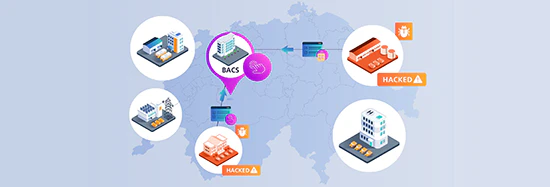
03.07.2025 - The National Cyber Security Centre (NCSC) is currently observing a wave of malicious ads on well-known search engines that lead users to phishing websites. On these phishing websites, scammers attempt to gain access to the login details of potential victims using a fake e-banking portal that looks like the real one.

1 July 2025

Week 26: Sophisticated phishing attempt – Fake federal government website lures victims of fraud

01.07.2025 - In recent weeks, we’ve seen a rise in scam messages claiming that police investigations have uncovered funds linked to fraud. The aim is usually to trick victims into paying fake fees. A new version of this scam uses a fake Swiss government website that promises victims that they can recover lost money by filling out a form and providing their banking details. In reality, it’s a sophisticated phishing trap.

30 June 2025

Cyberattack on Radix: Federal Administration data also affected

30.06.2025 - The foundation company Radix has been targeted by a ransomware attack, during which data was stolen and encrypted. Radix’s customers include various federal offices. The data has been published on the dark web and will now be analysed by the relevant offices.
24 June 2025

Week 25: Scammers exploiting commercial register data

24.06.2025 - Some company information is publicly accessible online. While this supports transparency and can be useful, it also creates opportunities for fraud. The NCSC is currently seeing a rise in cases where criminals use publicly available information – especially from the Central Business Name Index (Zefix) – to pose as legitimate companies.

17 June 2025

Week 24: Fake virus alert – Is my computer really infected?

17.06.2025 - Fake virus alerts claiming that your computer is infected are a common scam tactic. Scammers use pop-up messages on your browser to scare you with fabricated warnings about malware. Their aim is to trick you into downloading harmful software or sharing personal information. We regularly receive reports from people who, having seen such fake warnings, believe that their device is infected.
16 June 2025

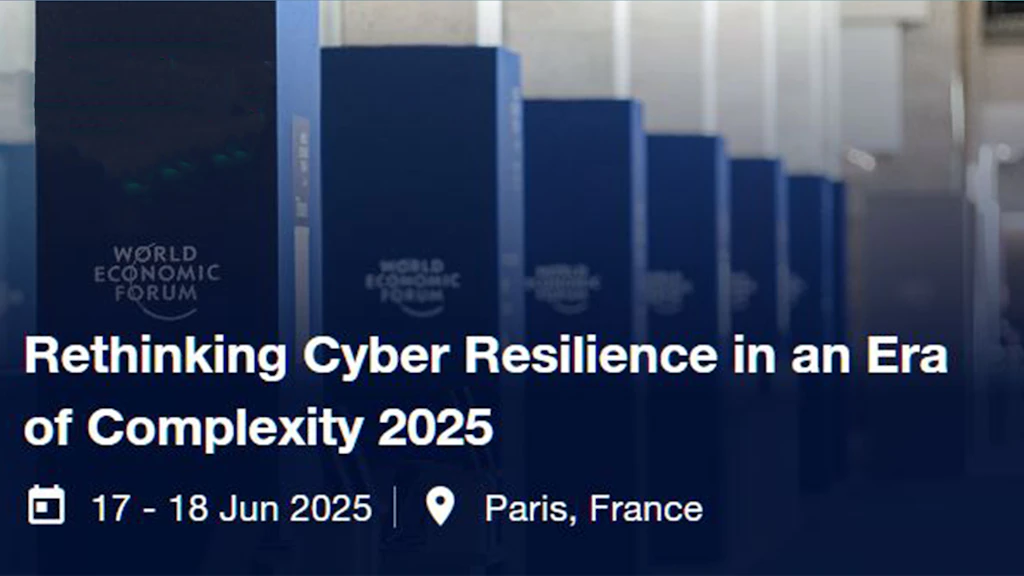
Florian Schütz to attend WEF Roundtable in Paris

17.06.2025 - The Director of the National Cyber Security Centre, Florian Schütz, will attend the international World Economic Forum Roundtable in Paris on 17 and 18 June. Under the slogan 'Rethinking Cyber Resilience in an Era of Complexity', international experts from politics, business and administration will discuss key issues, current initiatives and joint approaches to improving global cyber resilience in an increasingly complex digital world.

12 June 2025

Simple cybersecurity for SMEs

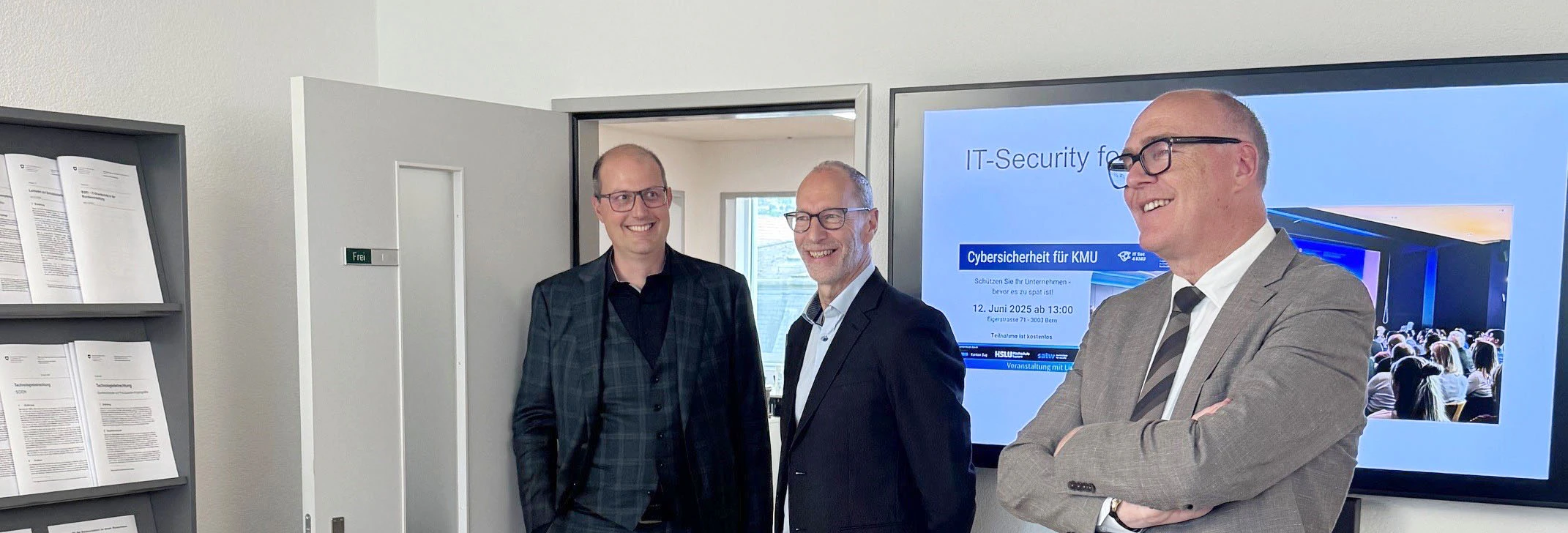
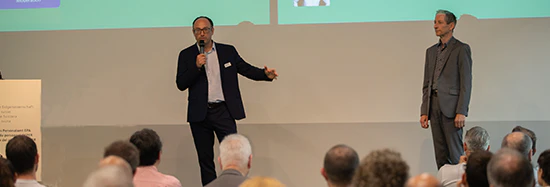
12.06.2025 - Small and medium-sized enterprises (SMEs) face the challenge of protecting their IT systems against cyberattacks. Although awareness of cyber risks has increased, implementing protective measures often proves difficult. To support SMEs in taking their first steps towards cybersecurity, the National Cyber Security Centre (NCSC), ITSec4KMU and the Swiss Insurance Association (SIA) recently organised an information event where experts provided SMEs with a simple introduction to this important topic.

11 June 2025

Enhanced cybersecurity cooperation in the financial sector: NCSC and Swiss FS-CSC strengthen partnership

11.06.2025 - The National Cyber Security Centre (NCSC) and the Swiss Financial Sector Cyber Security Centre (Swiss FS-CSC) are strengthening their partnership to bolster cybersecurity across Switzerland's financial sector. With the cooperation agreement they are joining forces and implementing targeted measures against growing cyberthreats.

10 June 2025

Week 23: More scam attempts involving fake jobs

Last week, the NCSC saw a rise in reports of fraudulent job offers. Criminals are luring job seekers in with the promise of easy online work, such as product reviews or game testing. These offers can be tempting because they seem to offer easy money and flexible working hours, but the scammers’ real aim is to steal your money or personal information. In some cases, the losses can be substantial: one victim lost almost CHF 80'000 – their entire life savings.

3 June 2025

Week 22: Two-step phishing attacks – How scammers circumvent classic security solutions

03.06.2025 - Phishing has been one of the most frequently reported scams for years. Until now, attackers have relied on quantity rather than quality, sending out bulk emails – most of them obviously dubious – in the hope that a small percentage of recipients will respond. However, the NCSC has observed a growing trend in targeted attacks that are fewer in number, but more sophisticated and therefore more likely to succeed. Last week, the NCSC was notified of a two-step attack that demonstrates how sophisticated phishing scams are becoming.

27 May 2025

Week 21: The hidden danger of online competitions

27.05.2025 - A new smartphone, a shopping voucher, a bike, a new car battery, or free public transport tickets – who wouldn’t be happy to win something like that? Unfortunately, offers like these are increasingly being used by scammers to lure people into traps. Last week, the NCSC received more reports than usual about fake prize draws. What look like giveaways from well-known companies often turn out to be scams – instead of receiving a prize, victims end up stuck in costly subscriptions or have their personal data stolen through phishing.

26 May 2025

Ransomware – when nothing works

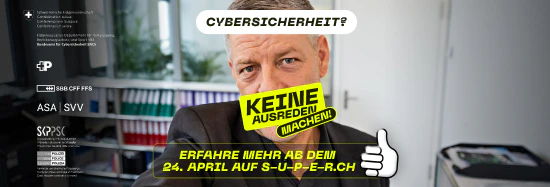
26.05.2025 - Suddenly everything is blocked: you can't access your systems and networks, all your data is encrypted – and shortly afterwards you get a ransom note. Typically, the note contains the threat that the data will be irrevocably deleted or published on the darknet. Unprepared companies are often faced with huge challenges at this point. But what can you do to prevent a ransomware attack or, if it is already too late, how can you deal with it in the best possible way? This year's national S-U-P-E-R.ch campaign "No excuses – take action!" calls on you to take responsibility and act preventively.

22 May 2025

Classifieds websites: It pays to be careful – better to invest your time than to lose your money!

22.05.2025 - Online shopping and specifically classifieds have become part of everyday life. But where there are real bargains, scammers are often not far away: fake listings are an everyday danger on these websites. But how can you spot them and protect yourself so that you can safely use classifieds websites? This year's S-U-P-E-R.ch national awareness campaign reminds us that our own carelessness is often the greatest danger. By paying attention and staying informed, you can greatly reduce the risk.

20 May 2025

Week 20: E-mails warning of fake viruses

20.05.2025 - Cybercriminals are constantly trying to make money through scam e-mails. One tactic that has been around for years and is still relevant plays on people’s fear of computer viruses. Recently, we have received an increasing number of reports about this type of scam. In these cases, however, the scam works not by tricking you with a fake site, but by redirecting you to a legitimate one.

16 May 2025

Expected DDoS attacks have begun in the context of ESC

16.05.2025 – As expected, DDoS attacks have been launched against various Swiss websites in connection with the Eurovision Song Contest (ESC). The DDoS attacks have so far not affected the Eurovision Song Contest’s operations. These attacks are aimed at attracting media attention and do not result in any data leakage.

15 May 2025

Cybersecurity is a matter for the boss – why top management needs to get involved

15.05.2025 - Cybersecurity isn't just an IT problem; it is a strategic issue for the company's management. Organisations of all sizes are potential targets for cyberattacks, and the consequences can be devastating, ranging from financial loss and reputational damage to loss of customer confidence. If cybersecurity is seen only as an IT issue, it risks being overlooked as a priority. This is where the national awareness campaign S-U-P-E-R.ch comes in with its message No excuses – take action: cybersecurity starts as a strategic responsibility at the executive level and is then carried throughout the organisation.

14 May 2025

First implementation report on the National Cyberstrategy (NCS)

14.05.2025 - At its meeting on 14 May the Federal Council took note of the first implementation report on the National Cyberstrategy (NCS). The report outlines the status of national efforts to strengthen cybersecurity. It was prepared by the NCS Steering Committee in collaboration with the National Cyber Security Centre (NCSC). The report clearly shows that progress has been made: key coordination structures have been established, ongoing projects implemented and new ones launched, and Switzerland’s international profile in the field of cybersecurity has been raised.

13 May 2025

Federal Councilor Martin Pfister visits the National Cyber Security Centre (NCSC)

13.05.2025 - On May 12, 2025, Federal Councilor Martin Pfister paid a visit to the National Cyber Security Centre (NCSC). The head of the DDPS considers it important to visit the federal offices in his department.

12 May 2025

Week 19: E-mails purporting to be from SBB spread malware

13.05.2025 - Fake e-mails claiming to be from SwissPass or SBB are a common occurrence. We frequently receive reports of such e-mails, which are usually phishing attempts. However, a particularly convincing version is currently being used to spread malware targeting Android devices.

9 May 2025

Cyber resilience during major events and international conferences

09.05.2025 – Major events and international conferences are often the target of cyberattacks. The National Cyber Security Centre (NCSC) expects that there will be attempts to disrupt the Eurovision Song Contest and is in close contact with the organisations involved in staging the event. Such attacks are often aimed at generating media attention.

8 May 2025

Be careful when scanning: the hidden dangers of tampered QR codes

08.05.2025 - QR codes are now a common part of everyday life – used for paying bills, parking, or accessing restaurant menus. However, cybercriminals are exploiting this convenience by creating codes that lead to fraudulent websites or redirect payments to unauthorised recipients. The S-U-P-E-R.ch 2025 'No excuses – take action!' campaign highlights the importance of being vigilant when using QR codes and taking active steps to minimise the risks involved.

6 May 2025

Week 18: Beware of voice phishing in the name of banks, crypto exchanges, PayPal and TWINT

06.05.2025 - Criminals use voice phishing to steal money and sensitive information. They call people pretending to be from well-known institutions such as banks, PayPal, TWINT or crypto exchanges. Many such cases continue to be reported to the National Cyber Security Centre (NCSC).

6 May 2025

Cross-border cyberthreats require international solutions

06.05.2025 - The latest semi-annual report from the National Cyber Security Centre (NCSC) outlines how cybercriminals operate internationally and the methods they use for their attacks. In light of these global cyberthreats and our ever-growing dependence on global software, international cooperation is becoming increasingly important. To strengthen cybersecurity in Switzerland, a reporting obligation for cyberattacks on critical infrastructure came into force on 1 April. This was developed in close alignment with international standards and EU directives.

29 April 2025

Week 17: Ongoing CEO scams targeting Swiss communes

29.04.2025 - The NCSC is observing an ongoing wave of CEO fraud attempts. Over the past week, the NCSC has received an increasing number of reports of criminals posing as senior local government staff attempting to persuade employees to buy gift cards or make payments online. This week's report highlights the latest methods being used, explains why local government is being targeted and provides information on how communal authorities (and everyone else) can protect themselves.

28 April 2025

NCSC Director Florian Schütz to attend RSAC Conference in San Francisco

28.04.2025 - The director of the National Cyber Security Centre (NCSC), Florian Schütz, will be attending the RSAC Conference in San Francisco from 28 April to 1 May. The conference is one of the leading events in the field of IT and cybersecurity bringing together representatives from industry, society and government to discuss a host of cyber-related topics. Florian Schütz will be accompanied by Ambassador Benedikt Wechsler and will take part in various panels and bilateral discussions with representatives from industry and international organisations.

24 April 2025

"No excuses – Do it!"- Launch of the 2025 national cybersecurity awareness campaign

24.04.2025 - People often neglect to set secure passwords and install security updates. The National Cyber Security Centre (NCSC), the Swiss Crime Prevention Unit (SCP), cantonal and municipal police forces, Swiss Federal Railways (SBB), Swiss Post and the Swiss Insurance Association (SIA) are launching the next stage of the "S-U-P-E-R.ch" campaign to raise public awareness about cybersecurity under the slogan "No excuses – Do it!".

22 April 2025

Week 16: Reusing old devices: great for the planet, but keep these tips in mind

22.04.2025 - Last week the NCSC received an unusual report from a person who had disposed of their broken laptop and was later contacted by someone from abroad claiming to have found their data on a newly bought laptop and have uploaded it to a cloud server. They asked if the previous owner still needed the data and wanted to download it, or if they should delete it. It’s a mystery how this data ended up in someone else’s possession. Could this be a blackmail attempt or a strategy to spread malware? The answer is surprising.

15 April 2025

Week 15: «Chain phishing» can happen on social media too

15.04.2025 - Social networks such as Facebook, Instagram, X and Snapchat are particularly attractive to cybercriminals because of their high level of user engagement. By stealing login credentials and gaining access to a social media account, scammers can share content and view private information. This opens up a range of malicious possibilities: they can post scam ads, spread false information about people or companies, or even blackmail victims. And by pretending to be the person whose credentials they have stolen, they can target that person’s friends and exploit them too. This can start a chain reaction where many people fall for the scam.

8 April 2025

Week 14: Classifieds phishing – fivefold increase in reports in a year

08.04.2025 - The NCSC regularly warns about classifieds scams. Classifieds offer scammers a wide range of opportunities: typical examples of scams include selling non-existent goods or failing to pay for goods that have already been shipped. In recent weeks, there has been a sharp increase in reports of classifieds phishing – a type of scam that targets credit card details, Twint and even e-banking accounts.

2 April 2025

Cybersecurity in simple terms – awareness-raising event for SMEs

02.04.2025 - For many small and medium-sized enterprises (SMEs), cyberattacks are still an abstract, intangible threat. Although awareness of cyber risks has increased, the challenge of putting theoretical knowledge into practice remains. To make it easier for SMEs to get to grips with cyber security, the National Cyber Security Centre (NCSC) and the ITSec4KMU association are organising a free awareness-raising event which will be held in Bern on 12 June.

1 April 2025

Week 13: Visiting the UK (and other countries) – be careful when applying for an ETA/ESTA

01.04.2025 -Swiss citizens wishing to travel without a visa to certain countries (e.g. the USA, Canada, Australia, New Zealand and, from 2 April, the UK) need an electronic travel authorisation. We are seeing an increase in private providers offering assistance in applying for such authorisations, but the added value of these services is often questionable and there is a significant risk of fraud. Application processes can be complex, and scammers are taking advantage of this by creating official-looking websites to trick people into giving up their information and money.

31 March 2025

Obligation to report cyberattacks on critical infrastructure comes into force on 1 April

31.03.2025 – The obligation to report cyberattacks on critical infrastructure comes into force on 1 April. From tomorrow, operators of critical infrastructure are required to report cyberattacks to the National Cyber Security Centre (NCSC) within 24 hours of discovery.

28 March 2025

National Cyber Security Centre Annual Report 2024 – Review of first year as a federal office

28.03.2025 - The National Cyber Security Centre (NCSC) draws a positive balance from its first year as an independent federal office. In its annual report published today, the NCSC provides an overview of the most important developments, successes and challenges in boosting cybersecurity in Switzerland in 2024.

25 March 2025

Week 12: Ticket scammers target buyers and sellers

25.03.2025 - We regularly receive reports of ticket fraud, and with ticket sales for this year’s open-air season and the upcoming Eurovision Song Contest about to begin, the number of scams is likely to increase in the coming weeks. Scammers take advantage of the fact that demand for tickets outstrips supply: they resell tickets at inflated prices, sell counterfeit tickets and put fake ads on the internet. In an unusual and frequently reported scam, they try to lure their victims to a fake website. Exercise caution and don’t let scammers fool you.

19 March 2025

Disruption to federal IT systems due to DDoS attack

19.03.2025 – As a result of intensive DDoS attacks, various IT services of the Federal Administration have been temporarily affected since around 2:30 p.m. on Wednesday, March 19, 2025.

18 March 2025

Week 11: Chain phishing with Microsoft 365

18.03.2025 - Over the past week, we have seen a number of chain phishing attempts targeting Microsoft 365 accounts in organisations. The aim of these attacks is to gain access to accounts in order to steal sensitive data that can be used for further attacks. What makes this type of phishing scam unique is the way that it spreads, in a kind of chain reaction. As one of the most widely used platforms for communication and collaboration in offices, Microsoft 365 accounts are an interesting target for cybercriminals.

11 March 2025

Week 10: Involuntary subscriptions when visiting legitimate websites

11.03.2025 - Last week we received a report about what appeared to be a dodgy car owner enquiry website – but a check of the website revealed no irregularities and we found the site to be legitimate. However, the person who submitted the report did incur unwanted costs.

7 March 2025

Reporting cyberattacks on critical infrastructure mandatory from 1 April 2025

07.03.2025 - At its meeting on 7 March, the Federal Council introduced a reporting obligation for cyberattacks on critical infrastructure, which will come into force on 1 April. Operators of critical infrastructure will be required to report cyberattacks to the National Cyber Security Centre (NCSC) within 24 hours of discovery. These reports will enable the NCSC to assist victims of cyberattacks and alert operators of critical infrastructure.

4 March 2025

Week 9: Hotels and guests targeted by cybercriminals

04.03.2025 - In several of our weekly reviews we have reported on cyberattacks on hotels and their guests. In the last few days we have received a number of fraud reports from hotel guests. In most cases, the cyberattackers had gained access to a hotel's reservation information.

27 February 2025

Online events on the topic of "reporting obligation for cyberattacks on critical infrastructure"

27.02.2025 - The reporting obligation for cyberattacks on critical infrastructure will be introduced in the first half of 2025. To show the affected organizations how to act correctly in the event of a cyberattack, the National Cyber Security Centre (NCSC) is organizing a series of online events on the topic of "reporting obligation for cyberattacks on critical infrastructure".

25 February 2025

Week 8: Phishing tricks – deceptive emails and how you can protect yourself

25.02.2025 - Phishing continues to be one of the most commonly reported scams – and unfortunately one that many people fall victim to. Scammers go to great lengths to make their messages look as real as possible, using a variety of tricks to increase their chances of success.

18 February 2025

Week 7: How celebrities are impersonated for investment scams

18.02.2025 - When using the internet today, you often come across scam websites that were designed to look like official news or TV sites. The scammers claim that you can make a fortune if you invest a little of your money with them, and they quote celebrities in fake interviews to give themselves credibility. These scam sites are just a click away and are promoted through ads and links on social media, streaming sites and elsewhere.

14 February 2025

Cybersecurity: NCSC Director Florian Schütz attends various international events

14.02.2025 - To strengthen international cooperation in cybersecurity, Florian Schütz, director of the National Cyber Security Centre (NCSC), has been attending various international cybersecurity events over the past few days. He chaired a panel at the AI Action Summit in Paris on building trust in artificial intelligence, met with cybersecurity authorities ahead of the Munich Security Conference and took part in a discussion at the Munich Cybersecurity Conference on the latest developments and best practices.

11 February 2025

Week 6: Scam emails from PayPal sent via Microsoft

11.02.2025 - Criminals are using an interesting scam to lure unsuspecting victims into calling a fake PayPal number. All they need is a PayPal account and a free service provided by Microsoft.

4 February 2025

Week 5: Classified ad scam – How to avoid phishing traps

04.02.2025 - Classified ad websites are a convenient way to sell things. However, as well as legitimate sellers, these websites are full of scammers who are always trying new tricks to get money or information from unsuspecting users. Classified ad phishing is a particularly insidious scam: scammers set up fake websites that look like courier services or the Swiss Post to trick users into giving up their login or credit card details.

28 January 2025

Week 4: Beware of property rental scams

28.01.2025 - Finding a new home is often stressful, and scammers take advantage of this. They post fake rental listings and make dubious offers, with the aim of getting unsuspecting people to send them money before they have even seen the property. The NCSC has been receiving an increasing number of reports of attempted scams involving property listings.

22 January 2025

Expected DDoS attacks have begun

21.01.2025 – As expected, DDoS attacks have been launched against various Swiss websites in connection with the World Economic Forum (WEF). The pro-Russian hacktivist group “NoName057(16)” has claimed responsibility for the attacks. The DDoS attacks have so far not affected the WEF's operations. These attacks are aimed at attracting media attention and do not result in any data leakage.

21 January 2025

Week 3: Scam SMSs on behalf of the cryptocurrency exchange Binance

21.01.2025 - Recently we have seen an increase in calls from purported banks about alleged security problems or fake invoices from various service providers. What is special about these cases is that the victims are not tricked into clicking on a link, but into calling a number. Phone calls allow scammers to better engage with victims and keep them on the line – this extra effort is likely to be worthwhile as it increases the scammers’ chances of success. Last week, the crypto trading platform Binance was the focus of scam attempts.

16 January 2025

Anti-Phishing Report 2024

16.01.2025 - Last year, the NCSC received a total of 975,309 reports of phishing. Based on these reports, 20,872 were identified as actual phishing websites. This represents an increase of 108% compared to the previous year, in which a total of 10,007 phishing websites were identified. The latest anti-phishing report explains how the NCSC handles phishing reports, the figures that characterised 2024, and the types of phishing that were common last year. The report also contains recommendations on how to protect yourself against phishing.

14 January 2025

Week 2: Cyber resolutions for 2025

14.01.2025 - Now that you have made your New Year's resolutions for 2025, we are happy to add a few tips to help you get through the year in good shape from a cybersecurity perspective. In many cases, following a few basic principles will protect you from phishing attempts and other forms of fraud.

10 January 2025

Disruption to federal IT systems due to DDoS attack

10.01.2025 – On Friday morning, January 10, the Federal Administration was affected by a disruption of its’ IT systems for about 45 minutes due to an ongoing DDoS attack. Among other things, telephony, Outlook, various websites and specialized applications of the federal government were affected. The situation was stabilized because of immediate countermeasures.

7 January 2025

Week 1: The new year has arrived, and with it new threats: AI-based crypto scams are on the rise

07.01.2025 - Unfortunately, as the popularity of cryptocurrencies has grown, so has the number of crypto scams. The use of artificial intelligence (AI) is particularly insidious. For example, scammers are using AI to create scam websites, social media profiles, and even videos that look deceptively real. In the first weekly review of the year, we look at a case involving a supposed crypto expert who was promoting software on YouTube that promised huge profits through AI-driven trading. Instead of the advertised software, however, victims unknowingly downloaded malware.